Proudly serving Ponte Vedra, FL. and Surrounding Areas

Tankless vs. Tank Water Heater: Which Is Right for Your Jacksonville Home?
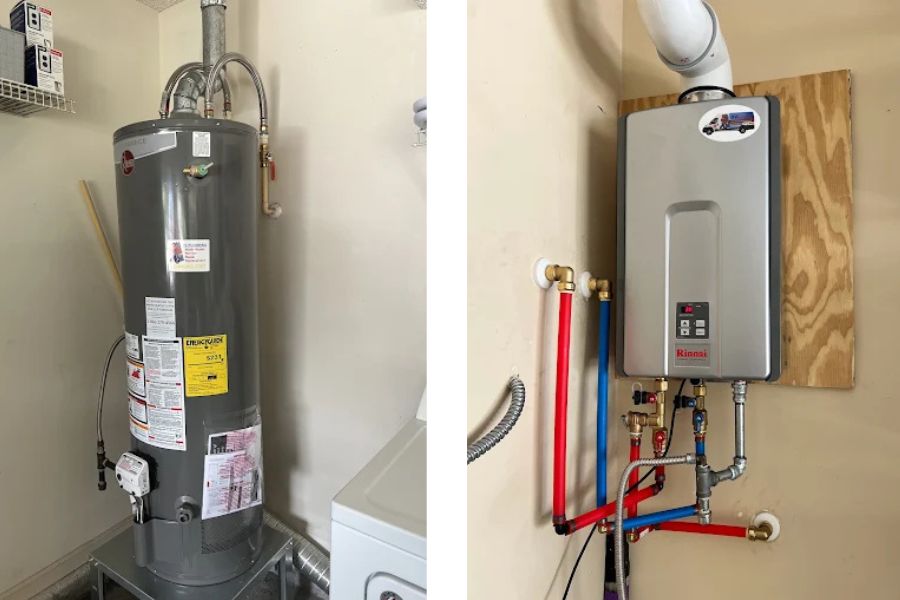
If you’re replacing a water heater in Jacksonville, you’ve probably asked yourself: should I stick with a traditional tank or go tankless? It’s one of the most common questions we hear from homeowners across Ponte Vedra, Nocatee, and greater Northeast Florida.
The truth is, there’s no single right answer. The best choice depends on your household size, budget, hot water habits, and long-term goals. Both tank and tankless water heaters work well in Florida — but they work differently.
In this guide, we’ll break down the tankless vs. tank water heater debate honestly. You’ll learn how each type performs in Jacksonville’s climate, what they cost, how long they last, and which one makes the most sense for your family. No sales pitch — just the facts so you can decide with confidence.
How Tank and Tankless Water Heaters Work
Before comparing the two, it helps to understand what’s actually happening inside each system. The core difference is simple: one stores hot water, and the other heats it on demand.
How a Traditional Tank Water Heater Works
A tank water heater keeps 40 to 80 gallons of water heated and ready to go at all times. A gas burner or electric element heats the water inside the insulated tank. When you turn on the faucet, hot water flows out from the top while cold water refills from the bottom.
It’s straightforward and reliable. Tank water heaters have been the standard in American homes for decades. Most Jacksonville homes built in the last 30 years came with one already installed.
The downside? The tank is always working to maintain temperature, even when nobody’s using hot water. That’s called standby heat loss, and it adds to your energy bill every month.
How a Tankless Water Heater Works
A tankless water heater doesn’t store water at all. When you open a hot water faucet, cold water flows through the unit and a gas burner or electric element heats it instantly. The moment you turn off the faucet, the unit stops heating.
This on-demand approach means you’re only using energy when you actually need hot water. There’s no 40-gallon tank sitting in your garage burning energy around the clock.
Tankless units are compact — about the size of a small suitcase — and can be mounted on a wall inside or outside your home. In Jacksonville’s mild climate, outdoor installation is common and can free up valuable garage or closet space.
Tankless vs. Tank Water Heater: Side-by-Side Comparison
Here’s how the two types stack up across the factors that matter most to Jacksonville homeowners.
Energy Efficiency and Monthly Costs
In Northeast Florida, energy efficiency matters year-round. Our warm climate means your water heater doesn’t have to work as hard to bring incoming water up to temperature — the groundwater here stays around 72 to 77 degrees in summer. That’s a big advantage for both systems compared to northern states.
Tank water heaters typically have an energy factor (UEF) between 0.60 and 0.95, depending on the model. Electric tanks tend to be more efficient than gas, but electricity costs more per BTU in most of Florida.
Tankless water heaters score higher, with UEF ratings between 0.87 and 0.99 for gas models. According to the U.S. Department of Energy, tankless water heaters can be 24 to 34 percent more energy-efficient than tank models for households that use 41 gallons or less per day.
For a typical Jacksonville family of four, that efficiency gain can translate to meaningful savings on your monthly utility bill. Over the life of the unit, those savings add up.
Upfront Cost vs. Long-Term Value
Let’s talk about the tank vs. tankless water heater cost — because it’s usually the first thing homeowners want to know.
Tank water heaters have a lower upfront cost. The unit itself is less expensive, and installation is simpler since most homes are already set up for a tank. If you’re replacing an existing tank with a similar model, the process is usually straightforward.
Tankless water heaters cost more upfront. The unit is pricier, and installation can involve upgrading your gas line, adding venting, or running new electrical. If you’re switching from tank to tankless for the first time, those conversion costs add to the total.
However, tankless units last significantly longer — typically 20 years or more compared to 8 to 12 years for a tank. When you factor in the longer lifespan and monthly energy savings, a tankless water heater often costs less over time.
Every home is different, so the exact numbers vary. We recommend getting a free estimate to see what both options would cost for your specific situation.
Lifespan and Durability in Florida
Florida’s hard water is tough on water heaters. Jacksonville’s water hardness ranges from 14 to 28 grains per gallon, which is considered very hard. That mineral buildup accelerates wear on both types of systems.
Tank water heaters in Northeast Florida typically last 8 to 12 years. Sediment from hard water settles at the bottom of the tank, reducing efficiency and eventually causing corrosion. Annual flushing helps extend the lifespan, but the tank will still wear out faster here than in areas with softer water.
Tankless water heaters generally last 20 years or more with proper maintenance. They’re not immune to hard water scale buildup, though. Annual descaling is important — especially in Jacksonville — to keep the heat exchanger working efficiently.
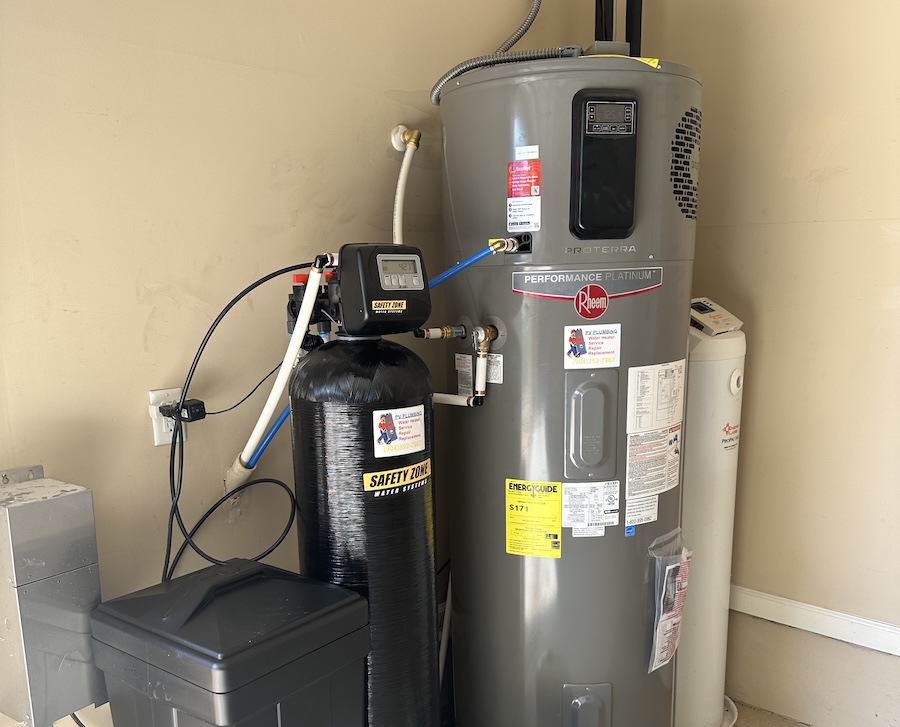
Pairing either type of water heater with a water softener can significantly extend its lifespan and reduce maintenance needs. It’s one of the smartest investments a Northeast Florida homeowner can make.
Hot Water Supply and Flow Rate
This is where household size really comes into play.
Tank water heaters deliver a large volume of hot water quickly. A 50-gallon tank can handle multiple showers, a dishwasher, and a washing machine running at the same time — until the tank runs out. Then you’re waiting 30 to 60 minutes for it to reheat. If you’ve ever been the last person to shower and gotten hit with cold water, you know the feeling.
Tankless water heaters never run out of hot water because they heat it continuously. But they have a flow rate limit, measured in gallons per minute (GPM). If too many fixtures demand hot water at once, the unit may not keep up, and you’ll notice a temperature drop.
In Jacksonville’s warm climate, this is less of an issue than in colder states. Since your incoming water is already warm, a tankless unit doesn’t have to work as hard to raise the temperature. That means you’ll get a higher effective flow rate here than the same unit would deliver in Minnesota.
For larger households that use a lot of hot water simultaneously, you can install a higher-capacity tankless unit or add a second one to cover the demand.
Best Water Heater Brands: Rheem, Rinnai, and AO Smith
As an authorized service provider for Rheem, Rinnai, and AO Smith, we install and service all three brands daily. Here’s what we’ve learned from years of hands-on experience in Jacksonville homes.
Rheem: Dependable All-Around Performance
Rheem is one of the most trusted names in water heating, and for good reason. Their tank and tankless models are built for reliability and backed by strong warranties. Rheem’s Professional Prestige line offers excellent efficiency ratings and smart home connectivity features.
We recommend Rheem to homeowners who want a proven, dependable brand with wide parts availability. If something ever needs servicing down the road, Rheem parts are easy to source locally.
Rinnai: Industry-Leading Tankless Technology
Rinnai is a tankless water heater specialist. Their units consistently deliver some of the highest flow rates in the industry, which makes them a strong choice for larger Jacksonville households that need hot water at multiple fixtures simultaneously.
Rinnai’s RU series is one of our most-installed tankless models. It recirculates hot water so you don’t have to wait for it to reach the faucet — a nice comfort upgrade that also saves water.
AO Smith: Quality and Value
AO Smith offers a solid lineup of both tank and tankless water heaters at competitive price points. For homeowners who want quality without paying the premium price of some competitors, AO Smith is an excellent choice.
Their Signature and ProLine series are reliable, efficient, and well-suited for Northeast Florida homes. AO Smith also manufactures some models domestically, which can mean better parts availability and support.
Which Water Heater Is Right for Your Home? A Decision Guide
Still not sure which direction to go? Here’s a quick framework based on the most common household situations we see in Ponte Vedra, Nocatee, and Jacksonville.
A tank water heater may be your best fit if:
- You have a straightforward replacement and want to keep costs low
- Your household uses hot water at predictable times (not all at once)
- You want a simple, proven system with minimal installation changes
- Your budget is focused on the upfront cost rather than long-term savings
- You have 1 to 3 people in the home
A tankless water heater may be your best fit if:
- You want unlimited hot water and never want to run out
- You’re building a new home or doing a major renovation (easier to plan for installation)
- You want to reduce your monthly energy bills over time
- You have a larger household (4+ people) with high simultaneous hot water demand
- You value a longer-lasting system with a smaller physical footprint
- You plan to stay in your home for 10 or more years (more time to recoup the investment)
Consider both options with a professional assessment if:
- You’re unsure about your household’s actual hot water demand
- You want to compare exact costs for your specific home
- You have hard water concerns and want guidance on the full system (water heater plus water softener)
No matter which type you choose, PV Plumbing & Air backs every installation with our 8-year craftsmanship guarantee — on both tank and tankless systems. That’s four to eight times longer than what most plumbing companies offer, because we stand behind our work.
The Bottom Line: Let Us Help You Choose
Choosing between a tankless and tank water heater doesn’t have to be stressful. Both are solid options, and the right answer depends on your home, your family, and your priorities.
Here’s what to remember:
- Tank water heaters offer lower upfront costs, simple installation, and reliable performance for smaller households
- Tankless water heaters deliver unlimited hot water, lower energy bills, and a longer lifespan — ideal for families who plan to stay in their home long-term
- Jacksonville’s warm groundwater and hard water both play a role in how each system performs — local expertise matters
- PV Plumbing & Air’s 8-year craftsmanship guarantee covers both tank and tankless installations, giving you peace of mind no matter which you choose
We’ve been helping Northeast Florida families make this decision for over 12 years. As a family-owned company and authorized Rheem, Rinnai, and AO Smith service provider, we’ll walk you through your options honestly and help you find the best fit — not the most expensive one.
Ready to compare your options? Call PV Plumbing & Air at (904) 392-7967 or request a free estimate online. We’ll assess your home, explain your choices, and give you a clear quote with no pressure.

Schedule your Worry-Free Service Today
Have the reliable plumbing pros at PV Plumbing service your home in Northeast Florida.