Proudly serving Ponte Vedra, FL. and Surrounding Areas

Signs Your Water Heater Needs Replacing (and When Repair Makes More Sense)
Introduction
Your morning shower suddenly turns ice cold. Or maybe you noticed a puddle forming under the tank in your garage. Either way, something is wrong with your water heater, and you are wondering whether it is time to repair it or replace it entirely.
You are not alone. Water heater failure is one of the most common plumbing issues homeowners in Ponte Vedra, Jacksonville, and Northeast Florida deal with every year. Knowing the signs your water heater needs replacing can save you from an unexpected flood, sky-high energy bills, and days without hot water.
In this guide, we will walk you through the key warning signs, explain how long water heaters actually last in Florida, and help you decide when repair makes sense versus when replacement is the smarter investment.
How Long Do Water Heaters Last in Florida?
Before you can judge whether your water heater is failing, you need to know where it stands in its lifespan. Age is the single most important factor in the repair vs. replacement decision.
Tank Water Heater Lifespan
Traditional tank water heaters typically last 8 to 12 years under normal conditions. That is the national average, and it assumes reasonably soft water and a climate-controlled installation location.
In Northeast Florida, the reality is often closer to the lower end of that range. Jacksonville has some of the hardest water on the state’s east coast, measuring between 14 and 28 grains per gallon in many areas. Hard water accelerates sediment buildup inside the tank, which forces the heating element to work harder and corrodes the tank lining faster.
If your tank water heater is approaching 8 years old and showing any symptoms, it is time to start planning for replacement rather than sinking money into repairs.
Tankless Water Heater Lifespan
Tankless water heaters generally last 15 to 20 years with proper maintenance. They do not store water, which means they avoid many of the corrosion and sediment problems that shorten tank water heater lifespans.
However, Florida’s hard water still takes a toll. Mineral scale builds up on the heat exchanger inside a tankless unit, reducing efficiency over time. Annual flushing is essential to get the full 15 to 20 years out of a tankless system in our area.
Why Florida Shortens Water Heater Lifespan
Several factors specific to Northeast Florida work against your water heater:
- Hard water. Jacksonville’s water hardness causes mineral deposits to coat heating elements and line tank interiors, reducing efficiency and accelerating corrosion.
- Sediment buildup. Florida’s water supply carries fine sediment that settles at the bottom of tank water heaters. Over time, this layer insulates the water from the heating element, causing the unit to overheat and deteriorate.
- High humidity. Ponte Vedra, Nocatee, and the rest of Northeast Florida experience humidity levels that promote external rust and corrosion, especially on units installed in garages.
- Garage installations. Most Florida homes keep the water heater in the garage, where it is exposed to temperature swings, humidity, and dust. This is harder on the unit than a climate-controlled indoor closet.
If you have not been flushing your tank annually or servicing your tankless unit, these factors may have already shortened your water heater’s life by two to three years.
5 Warning Signs Your Water Heater Needs Replacing
These are the visual and performance signals that tell you your water heater is failing. If you notice one or more of these, it is time to call a professional for an honest assessment.
1. Rusty or Discolored Hot Water
When you turn on the hot water and it comes out brown, orange, or rust-colored, that is a sign of corrosion inside the tank. The steel lining is breaking down, and rust particles are mixing into your water supply.
Test this by running only the hot water tap. If the discoloration disappears when you switch to cold, the problem is almost certainly the water heater, not your pipes. Once the tank itself is corroding, no repair can reverse it. Replacement is the only real fix.
2. Rumbling, Popping, or Banging Sounds
A healthy water heater operates quietly. When you start hearing rumbling, popping, or banging from the tank, it usually means a thick layer of sediment has built up on the bottom.
As the heating element works to heat water through that sediment layer, trapped air bubbles pop and create noise. This is especially common in Northeast Florida because of our hard water. The sediment also forces the unit to run longer and hotter, which wears out the tank faster.
A flush may help in the early stages. But if your unit is older than 8 years and making consistent noise, the sediment has likely already caused permanent damage.
3. Water Pooling Around the Base
Any water pooling around the base of your water heater is a red flag. Small leaks can come from fittings, the pressure relief valve, or the drain valve, and those are often repairable.
But if the leak is coming from the tank itself, that means the inner lining has cracked or corroded through. A cracked tank cannot be repaired. This is one of the clearest signs your water heater needs replacing immediately, before a small leak becomes a full tank failure and floods your garage or home.
4. Inconsistent Water Temperatures
If your hot water is unpredictable, swinging between lukewarm and scalding, the heating element or thermostat is likely failing. In some cases, this is a straightforward repair.
However, inconsistent temperatures in an older unit often point to sediment buildup interfering with the heating element, a failing dip tube, or multiple components wearing out at the same time. When a water heater starts having temperature problems after year 8, the underlying issues are usually systemic rather than isolated.
5. Your Energy Bills Are Climbing
Water heating accounts for roughly 18 to 20 percent of your home’s energy costs, according to the U.S. Department of Energy. If your electric or gas bill has been creeping up without any other explanation, your water heater may be the culprit.
As sediment builds up and components degrade, the unit has to work harder and run longer to deliver the same amount of hot water. You are paying more money for worse performance. A new, high-efficiency unit from Rheem, Rinnai, or AO Smith can reduce water heating costs significantly.
Water Heater Repair vs. Replacement: How to Decide
Not every problem requires a full replacement. Some issues are quick, affordable fixes. The key is knowing where the line falls.
When Repair Makes More Sense
Repair is usually the right call when:
- The unit is less than 6 to 8 years old. A younger water heater with a single failing component is worth fixing.
- The problem is isolated. A faulty thermostat, a worn-out heating element, or a leaky pressure relief valve are all repairable issues that do not signal broader failure.
- The repair cost is well below 50 percent of replacement cost. A $150 to $300 repair on a 5-year-old water heater is a good investment.
- There is no tank corrosion. If the tank itself is structurally sound, individual component repairs can extend its life.
When Replacement Is the Smarter Choice
Replace your water heater when:
- It is 8 to 12 years old (tank) or 15 to 20 years old (tankless). An aging unit that needs repair is usually on borrowed time.
- Repair costs exceed 50 percent of replacement cost. This is known as the “50% rule,” and it is the industry standard for water heater decision-making. If a repair quote is more than half the cost of a new unit installed, replacement gives you better long-term value.
- You are making frequent repairs. If you have already called a plumber two or three times in the past year for the same unit, those repair bills are adding up. A new water heater with a solid warranty eliminates the cycle.
- The tank is leaking. A leaking tank cannot be repaired. Period.
- You want better efficiency. Modern water heaters are significantly more energy-efficient than units built even 10 years ago. Upgrading can lower your monthly energy costs enough to offset the investment over time.
The 50% Rule Explained
Here is how the 50% rule works in practice. Say your plumber quotes you $600 for a repair on your 9-year-old tank water heater. A new water heater installed costs roughly $1,200 to $2,000 depending on the type and brand.
If the repair is $600 and replacement starts at $1,200, that repair cost is 50 percent of the replacement cost. At that point, you are better off putting that money toward a brand-new unit that comes with a fresh warranty and years of reliable service ahead.
When you factor in Florida’s hard water and the likelihood that other components will fail soon on an aging unit, the math almost always favors replacement once you hit that 50 percent threshold.
Why the Replacement Investment Pays Off
Replacing a water heater is a significant expense, and we understand that. But there are real financial and practical reasons it often makes more sense than continuing to repair an aging unit.
Energy Savings Add Up
New water heaters from Rheem, Rinnai, and AO Smith are built to meet or exceed current energy efficiency standards. Depending on your current unit’s age and condition, upgrading can reduce your water heating energy costs by 10 to 30 percent.
Over the 10- to 15-year life of a new unit, those savings are substantial. Many homeowners in Ponte Vedra and Jacksonville find that the monthly energy savings help offset the upfront cost.
PV Plumbing & Air’s 8-Year Craftsmanship Guarantee
One of the biggest concerns homeowners have about replacement is whether the installation will hold up. That is why we back every water heater installation with our 8-year craftsmanship guarantee.
Most plumbing companies offer a one- to two-year labor warranty. Our 8-year guarantee means that if anything goes wrong with our workmanship for up to eight years after installation, we make it right at no cost to you. It is insurance on your investment, and it reflects our confidence in the quality of our work.
Authorized Rheem, Rinnai, and AO Smith Service
As an authorized service provider for Rheem, Rinnai, and AO Smith, our team is factory-trained on the top water heater brands in the industry. That means your new unit is installed to manufacturer specifications, which protects your equipment warranty and ensures peak performance from day one.
Best Practices and Pro Tips
Do:
- Check the age of your water heater by reading the serial number on the manufacturer’s label (the first two digits often indicate the year of manufacture)
- Flush your tank water heater annually, especially in Northeast Florida where hard water accelerates sediment buildup
- Schedule a professional inspection if your unit is over 7 years old, even if it seems to be working fine
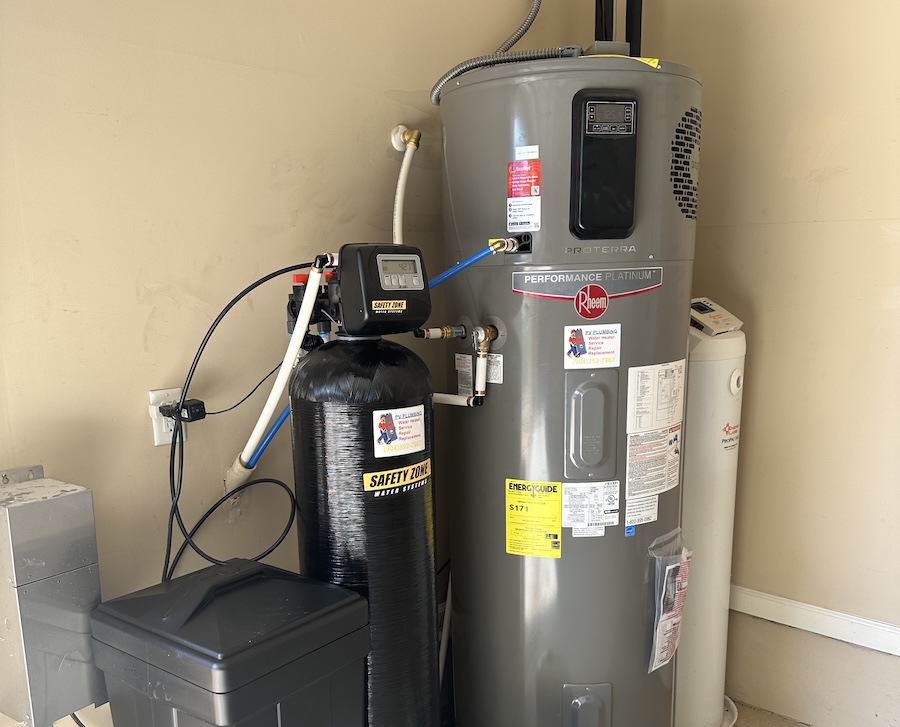
- Consider a water softener to extend the life of your next water heater in our hard water area
- Get a free estimate before committing to any major repair on an older unit
Don’t:
- Ignore small leaks and hope they go away (they always get worse)
- Spend more than 50 percent of replacement cost on repairing an aging unit
- Attempt to repair a leaking tank (it cannot be fixed)
- Skip annual maintenance and expect your water heater to hit the top of its lifespan range in Florida
- Wait until complete failure to start planning for replacement (emergency installations cost more and limit your options)
Conclusion
Now you know the warning signs that tell you a water heater is failing and the straightforward framework for deciding between repair and replacement.
Key takeaways:
- Age is the starting point. Tank water heaters last 8 to 12 years; tankless units last 15 to 20. Florida’s hard water and humidity often shorten those ranges.
- Watch for the warning signs. Rusty water, rumbling sounds, pooling water, inconsistent temperatures, and rising energy bills all signal trouble.
- Use the 50% rule. If repair costs exceed 50 percent of replacement cost on an older unit, replacement is the better value.
- A quality installation matters. PV Plumbing & Air’s 8-year craftsmanship guarantee protects your investment far longer than the industry standard.
If your water heater is showing any of these signs, or if it is approaching the end of its expected lifespan, we are here to help. PV Plumbing & Air offers free estimates on water heater replacement for homeowners throughout Ponte Vedra, Nocatee, Jacksonville, and St. Augustine. Call us at (904) 392-7967 or visit pvplumbingservices.com/contact-us to schedule yours.

Schedule your Worry-Free Service Today
Have the reliable plumbing pros at PV Plumbing service your home in Northeast Florida.